Short answer: To build a personal brand, start from the outcome you want and work backwards: decide what you need to be known for, what you must do to be known for it, and what you need to learn first. Then find the gap your niche is ignoring, tell a three-part story (catalyst, core truth, proof), start narrow on two or three platforms, post enough to learn what your audience calls quality, and only monetize after you have built trust. This breakdown comes from a 6 hour course with nearly 1.8 million views, plus a 2026 positioning playbook.
Why are these two videos worth studying?
The main source is How to Build a Personal Brand (Full Course) by Caleb Ralston, published April 4, 2025. When we checked on November 1, 2026, it had 1,797,927 views on a channel with about 176,000 subscribers. The median of the 30 other uploads on his channel is about 36,500 views, so this one is roughly 49 times his normal result. A video that runs over 6 hours and still pulls that kind of number tells you how many people are searching for a complete answer, not another list of tips.
The second source adds the 2026 angle on positioning and topics. The NEW Personal Brand Strategy Dominating Social Media in 2026 by Kallaway, published August 12, 2026, had 117,262 views on a channel with about 481,000 subscribers. That is about 2.2 times the median of the 30 uploads around it (about 54,000), a smaller outlier, but it is the most concrete positioning exercise we found from this year.
Two notes before you copy them. Caleb's video pushes a free workbook, his website and a consulting application, and Kallaway's pushes his free guide, his coaching program and the research tool he co-owns. We left all of that out and kept only the frameworks. Second, both creators describe their own results. Treat their numbers as their claims, not as a promise for your account.
If you want to spot outliers like these in your own niche, read how to find outlier videos in your niche.
Use it now: Find the personal brand videos beating their channel in your niche
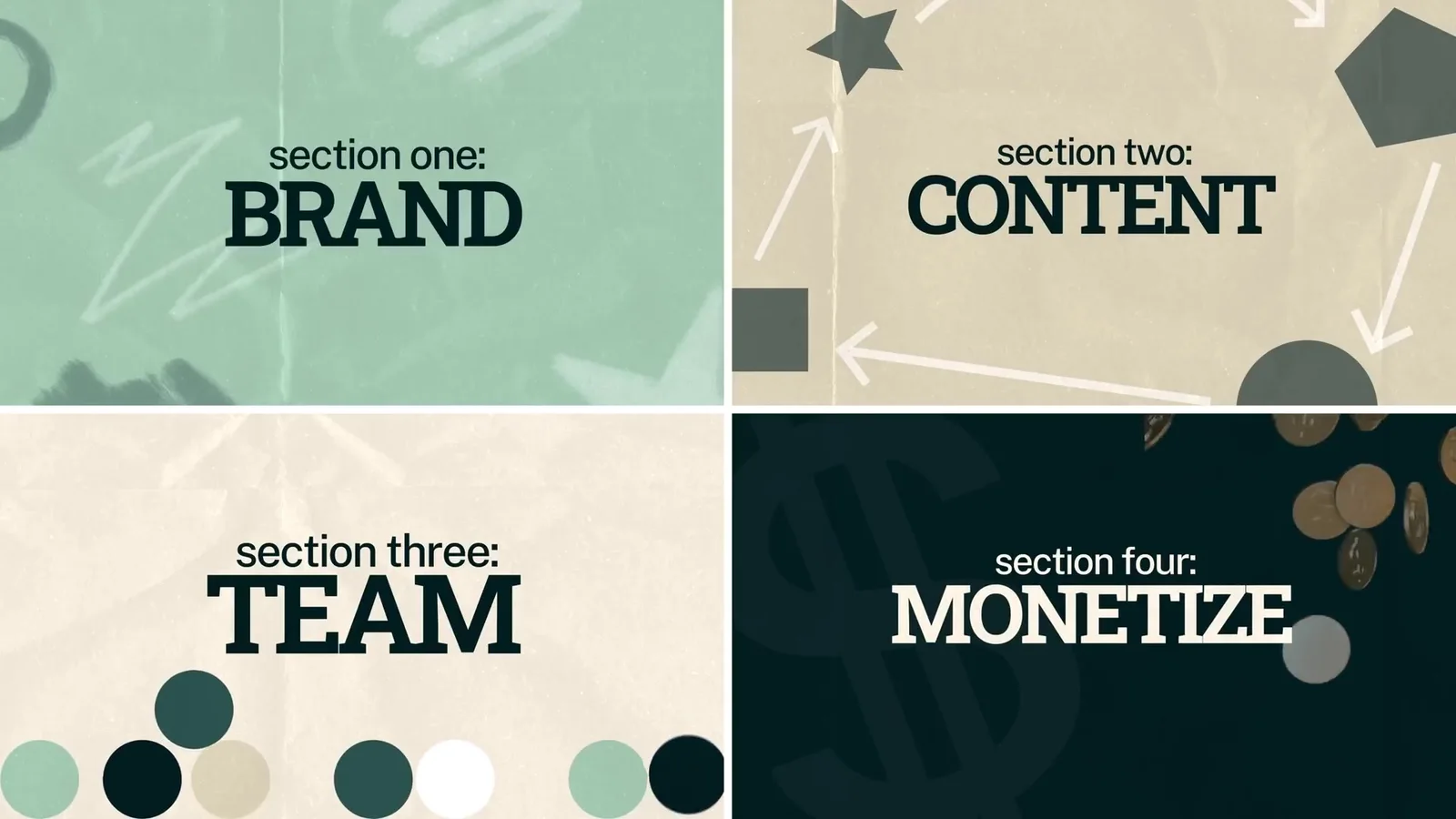
The course is split into four sections: brand, content, team and monetize. This guide follows the same order. Source: Caleb Ralston video, frame at 1:02
What is a personal brand, really?
Caleb's definition is the most useful one we have heard: good branding is "an intentional pairing of relevant things done consistently," and brand is the byproduct. "Brand is when the audience inherently associates those things together." Source: Caleb Ralston, video at 1:15.
His examples make it concrete. Nike paired itself with greatness in basketball through Michael Jordan. Gary Vaynerchuk is now synonymous with content because he kept making it for years. Harley-Davidson has paired itself with freedom in its marketing for a long time. In each case the association came from repeated action, not from a logo or a tagline.
Kallaway adds a way to measure whether it is working. He calls it authority density: "Micro fame isn't about the number of followers you have. It's about your authority density per follower." His reasoning is simple: "dollars come from authority, which comes from trust accrued over time." Source: Kallaway, video at 1:17.
His test is worth running today. Imagine you asked every follower, "Who is the number one person in this niche that you trust the most?" If most would not say your name, "you don't have a follower problem, you have a density problem." Source: Kallaway, video at 3:23.
He also argues this is easier to do now than five years ago, because of "three core shifts" in how the platforms work. Zero ramp virality means a brand new account can go viral in its first days. Automatic targeting means the algorithm finds your ideal viewer within a couple of videos. Unlimited scale means For You feeds show extra posts to similar non-followers instead of tiring out your current ones. Source: Kallaway, video at 3:58.
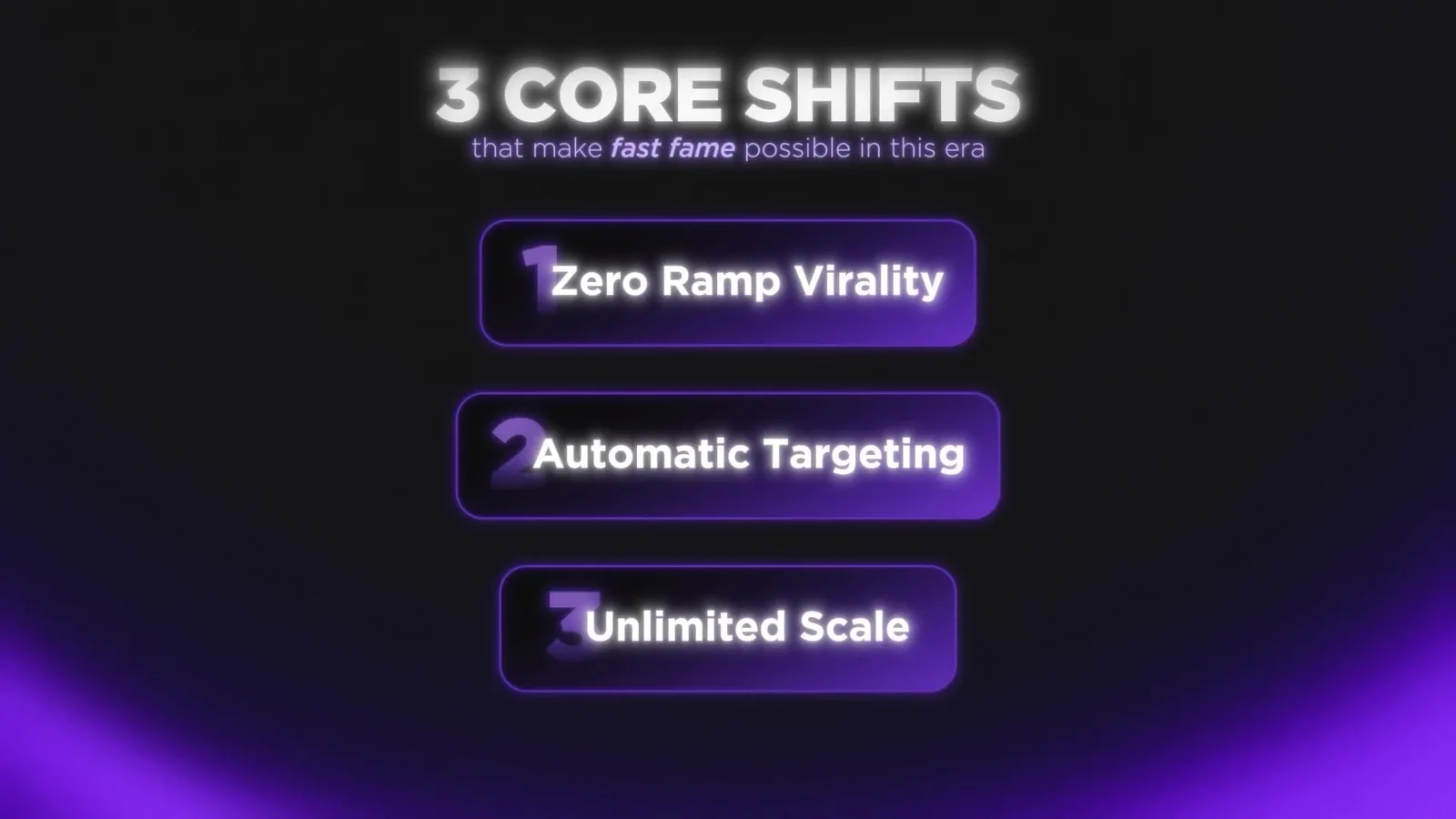
Kallaway's three core shifts that make a niche personal brand faster to build today: zero ramp virality, automatic targeting and unlimited scale. Source: Kallaway video, frame at 6:24
How do you define what you want to be known for?
Caleb uses what he calls the brand journey framework. It starts from the end and works back to today with four questions:
- What is our desired outcome? What do we want to have happen?
- What do I have to be known for in order for that to happen?
- What do I have to do in order to be known for that?
- What do I have to learn in order to do that?
The last answer is your to-do list for this week. Source: Caleb Ralston, video at 4:05. His point on question three is the one most people skip: building a brand "isn't just about things that we say, it's about our actions."
Then list the associations you want, and just as carefully, the ones you do not. "If you don't actively shape your associations, your audience is going to do it for you." Source: video at 8:34. His example is turning down podcast invites from hosts he does not trust, even with a big audience, because "awareness is not worth the trade." People will only know you in light of that pairing. Source: video at 11:53.
How do you position yourself in a crowded niche?
Caleb's rule: do not blend in. "Find what is missing in your industry and own that gap." It can be your information, your philosophy or your personality. To find it, ask what the people already making content in your space are "saying that I disagree with," and how you can take what has been taught for years and "bring a fresh perspective to the table." Source: Caleb Ralston, video at 12:12.
His own gap is a good model. Most creators in his space push virality and views. He positions on a long-term, trust-built brand, because if you only chase views, "the moment the algorithm changes, nobody's going and searching for your name."
Kallaway turns this into a checklist. He calls the result a unique positioning angle and says there are "seven different positioning attributes" where you can find white space, and the more crowded your niche, the more of them you stack. Source: Kallaway, video at 10:02.
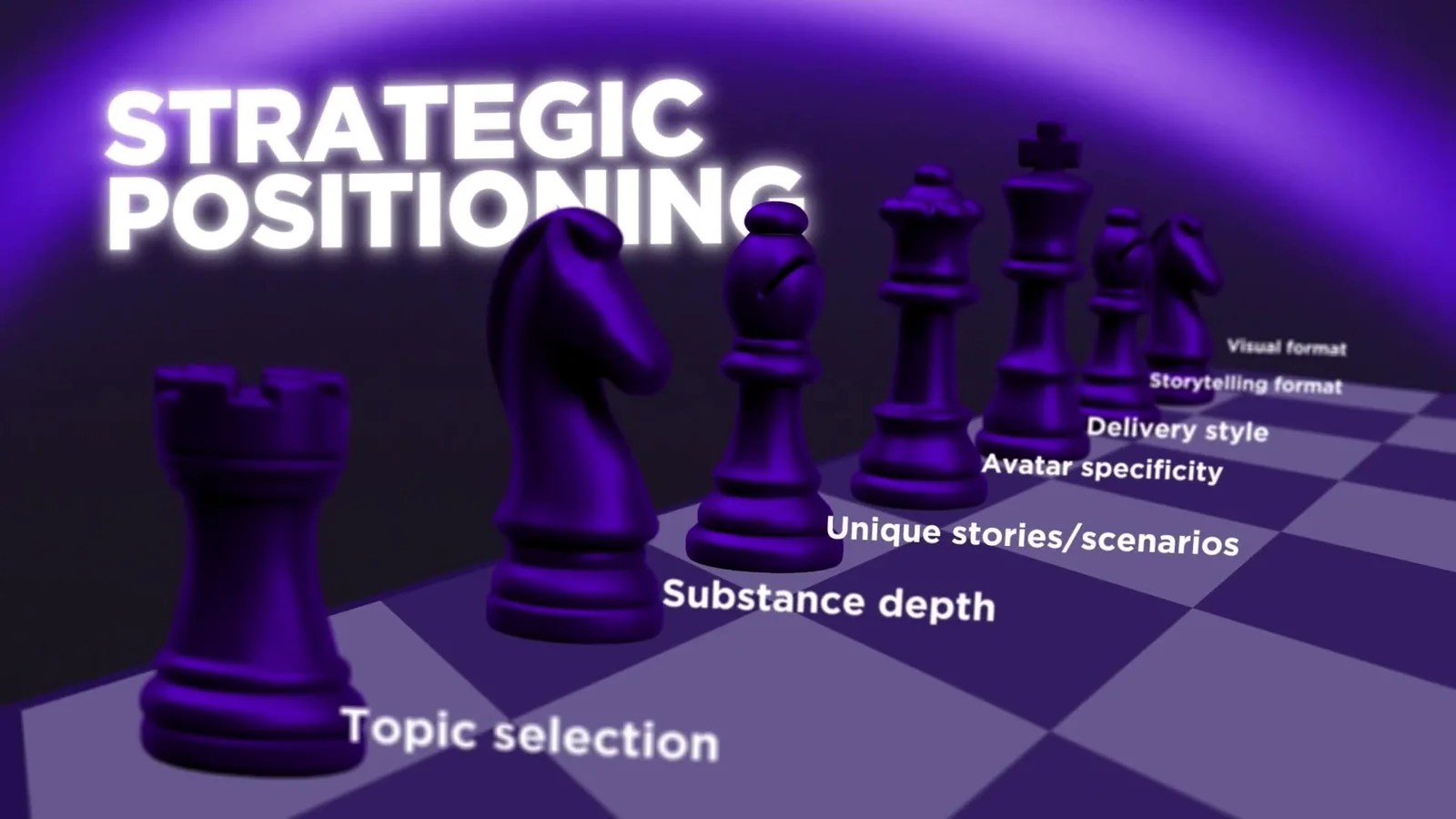
The seven positioning attributes, from topic selection to visual format. In a crowded niche you stack several of them. Source: Kallaway video, frame at 12:48
| Attribute | What it means | Example from the video | |---|---|---| | Topic selection | Cover topics your niche ignores | Talking about hooks when nobody else does | | Substance depth | Same topics, deeper insight | Going a level past surface-level tips | | Unique stories or scenarios | Experience others cannot copy without lying | Lessons from accounts you actually grew | | Avatar specificity | Serve an underserved slice | Social media growth for mortgage brokers | | Delivery style | Tone, rhythm, how you come across | Buttoned up in a niche full of raw videos | | Storytelling format | A format nobody in the niche uses | Challenge videos in a niche of listicles | | Visual format | How you film and edit | Cinematic in a niche shot in bedrooms |
If you cannot find white space by looking at your own niche, Kallaway's fix is what he calls transpositioning: study what works in distant niches and bring it over, because "you're not going to outrun somebody by cloning the person that's in your niche." Source: video at 19:51.
What should your brand story say?
Caleb throws out the classic problem, transformation, outcome story because it assumes every brand has one dramatic moment. "Great brands aren't built on a singular moment." Instead he uses a three-part brand story framework. Source: Caleb Ralston, video at 26:30.
- Catalyst: why your brand exists. What needs to change? What do you see that others don't? Why do you feel the need to act on it?
- Core truth: what makes you different. What do I believe that others do not? What is it about my personality that stands out (what do people compliment you on)? Why would the audience care? His example is the musician Russ, who keeps repeating his belief that artists should stay independent and own their music.
- Proof: how you reinforce it. "Your brand is not what you say, it's what you do and prove over and over again." Gary Vee does not just talk about content volume, he has shown it for 15 plus years. Source: video at 30:33.
He then runs his own story through it in about a minute: brands chasing views but not building trust (catalyst), brand as an intentional pairing done consistently (core truth), the brands he has built and the free course itself (proof). Source: video at 31:43. Write yours in three sentences the same way before you film anything.
How do you pick your content topics?
Start narrow. "I encourage you to start narrow," Caleb says, because trust comes from being great at one thing and talking about it constantly. The friend who claims to be great at everything is believed about nothing. Source: Caleb Ralston, video at 33:34. Gary Vee spent his first years on YouTube as the wine guy with Wine Library TV and only later widened into business and marketing.
When you do widen, "expand in layers, not leaps." Each new topic should feel like a natural step to your audience. Source: video at 43:07. And keep returning to your roots now and then. His example is Crayola bringing back retired colors, a nostalgia play for the parents who grew up with them.
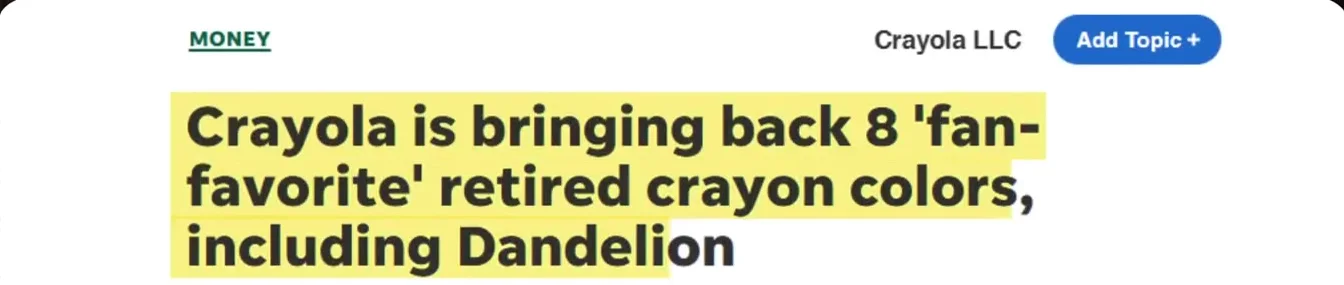
The headline Caleb uses for "return to your roots": Crayola bringing back 8 retired crayon colors. Source: Caleb Ralston video, frame at 40:36
He is not saying talk about one thing only. He uses an 80/20 split: 80% on the one thing you want to be known for, 20% on other parts of your life so you come across as human. He calls this interest stacking, the same way coworkers become friends once they find a second thing in common. Source: video at 47:21.
Kallaway gives the weekly version of this, his 3-2-1 content strategy. Pick "three different topic buckets that you make two videos each per week," and use the seventh video as a "chaos agent," a random test from outside your buckets. One bucket is broader so you have a shot at reach. The other two are narrow topics your ideal buyer cares about, built for trust rather than virality. Source: Kallaway, video at 21:30.
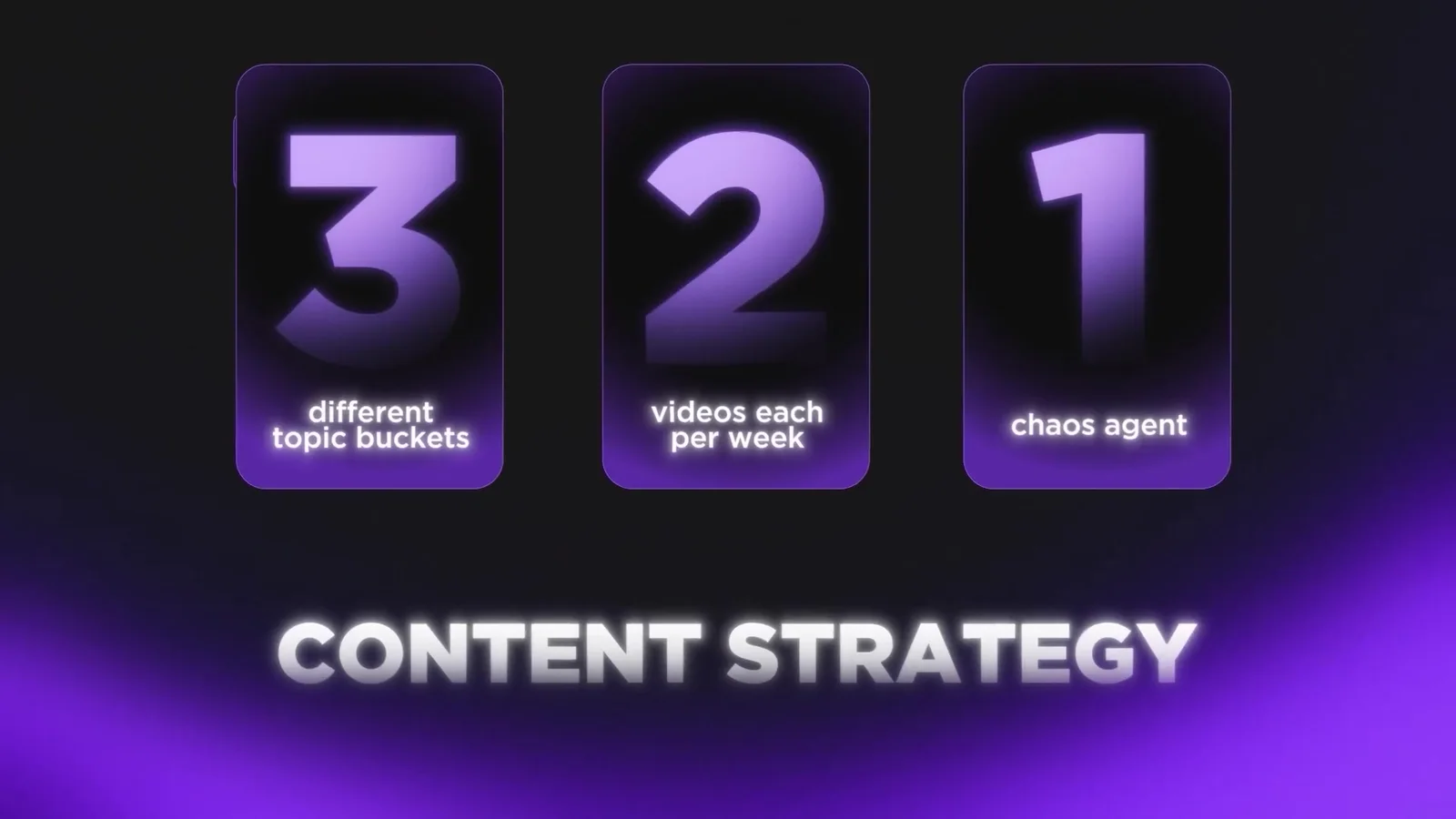
The 3-2-1 content strategy: three topic buckets, two videos each per week, one chaos agent. Source: Kallaway video, frame at 21:56
To choose the buckets with data instead of guessing, he studies 20 to 25 competitor channels "between 25,000 and 250,000 followers," sorts their videos from the last three months by outlier score, and groups the winners by topic. After two weeks he kills any bucket that is not working and promotes a new one. Source: video at 22:56. This is exactly the research GOVRL is built for, more on that below.
Which content medium and platforms should you choose?
Caleb lists four mediums: written, video, audio and graphic or design. Do some of all of them, but pick the one that will be your 80%, based on your strengths and on what you can keep doing for years. Source: Caleb Ralston, video at 52:44.
If you can stand being on camera, "video content is the highest leverage medium," because one long video becomes clips, a podcast, quote graphics and LinkedIn posts. Source: video at 56:54. If the camera makes you dread the work, he says do not start there yet.
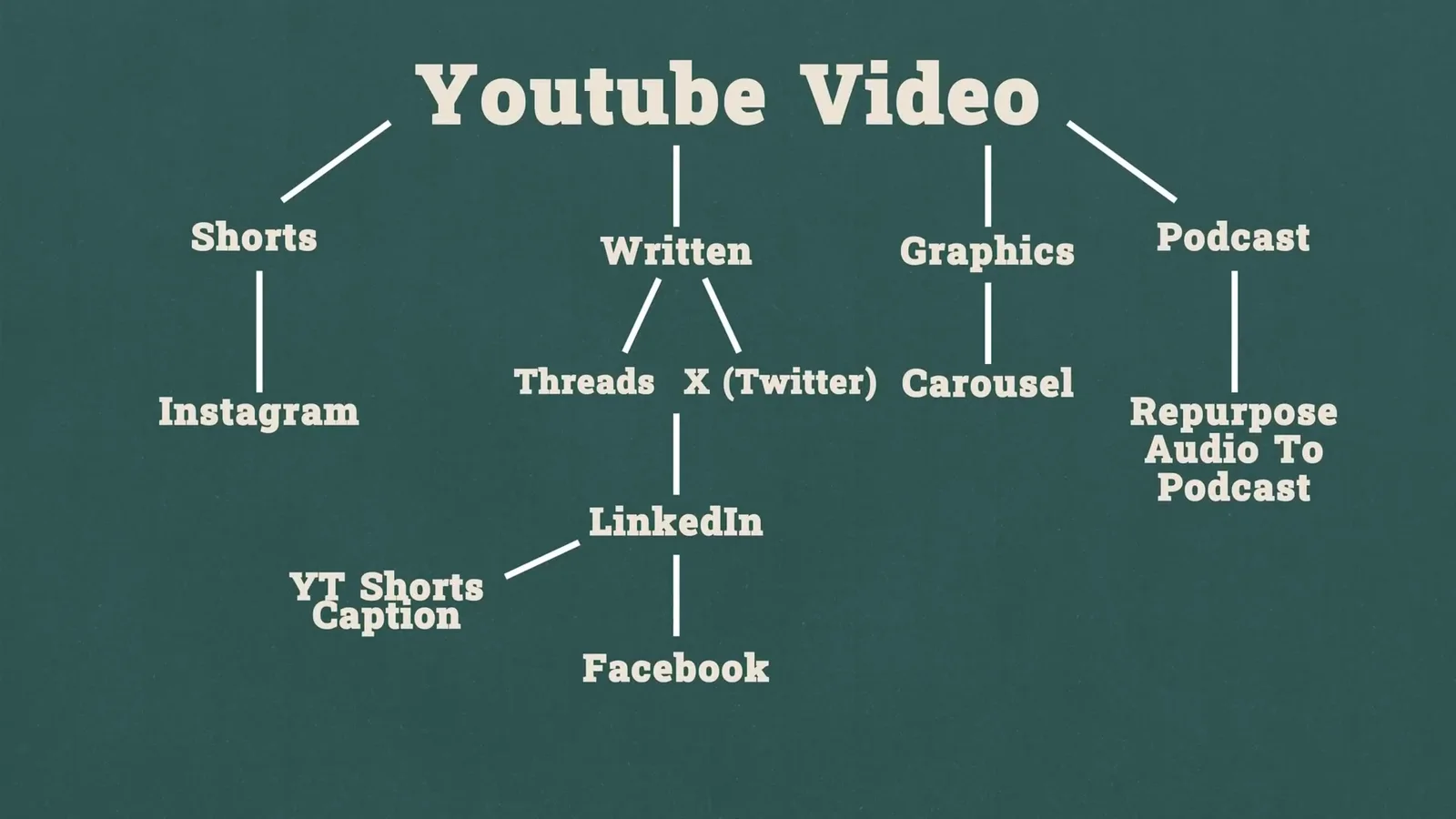
Caleb's map of one YouTube video turned into Shorts, written posts for Threads, X, LinkedIn and Facebook, carousels, graphics and a podcast. Source: Caleb Ralston video, frame at 1:41:12
He walks through that tree live and ends with "easily over 10 pieces of content" from one video. Two details are worth stealing: build carousels with two slides per section of the video, and turn the video's hook into the first two slides, because Instagram gives a carousel a second chance and serves it to followers again. Source: video at 1:39:23. Our Hormozi content model breakdown goes deeper on turning one idea into many posts.
For platforms, "prioritize two to three platforms." One platform is a single point of failure. He points to the 12 hour period, about a month before he filmed in February 2025, when TikTok disappeared in the US and creators whose income depended only on TikTok panicked. Source: video at 1:08:29. Short form is the easier start and builds awareness, but he views "long form as the place where conversion actually happens." Source: video at 1:13:13.
How often should you post?
Caleb's answer to quality versus quantity is what he calls the accordion method. You do not decide what quality is. "Your audience is who determines what quality is, not you." Source: Caleb Ralston, video at 1:25:36.
So you use volume to learn faster. Ten videos posted in one week tell you what your audience likes much sooner than the same ten videos spread over 30 days. Once the comments, likes and views show you what works, you compress the accordion and put more effort into each piece. Lights and cameras are not quality: some of the most viewed videos online were shot at night on a phone.
Start with your highest leverage platform, the one that brings your best results and lets one piece of content become many. Source: video at 1:27:21. Then "scale by platform, not all at once": raise volume on your number one platform while the others stay in maintenance mode. Source: video at 1:41:18. If you post on Instagram, our honest answer on whether you need to post every day pairs well with this.
When should you build a team?
Most people starting out will not hire yet, but Caleb's rules save money when you do. Hire for culture over skills, because skills are easier to train. "We hire to solve problems," not to fill roles, and a bad hire "takes months to recover." Source: Caleb Ralston, video at 3:21:29.
His growth stages: in year zero to one, use contractors and agencies so you stay lean and can test which platforms suit you. From roughly year one to three, bring critical roles in house, for example a video editor once YouTube brings 70 to 80% of your qualified leads, while the agency stays on for consulting. Even then he keeps some agencies for very specialized work and for scaling up during launches, so you never have to hire and then fire. Source: video at 4:33:03.
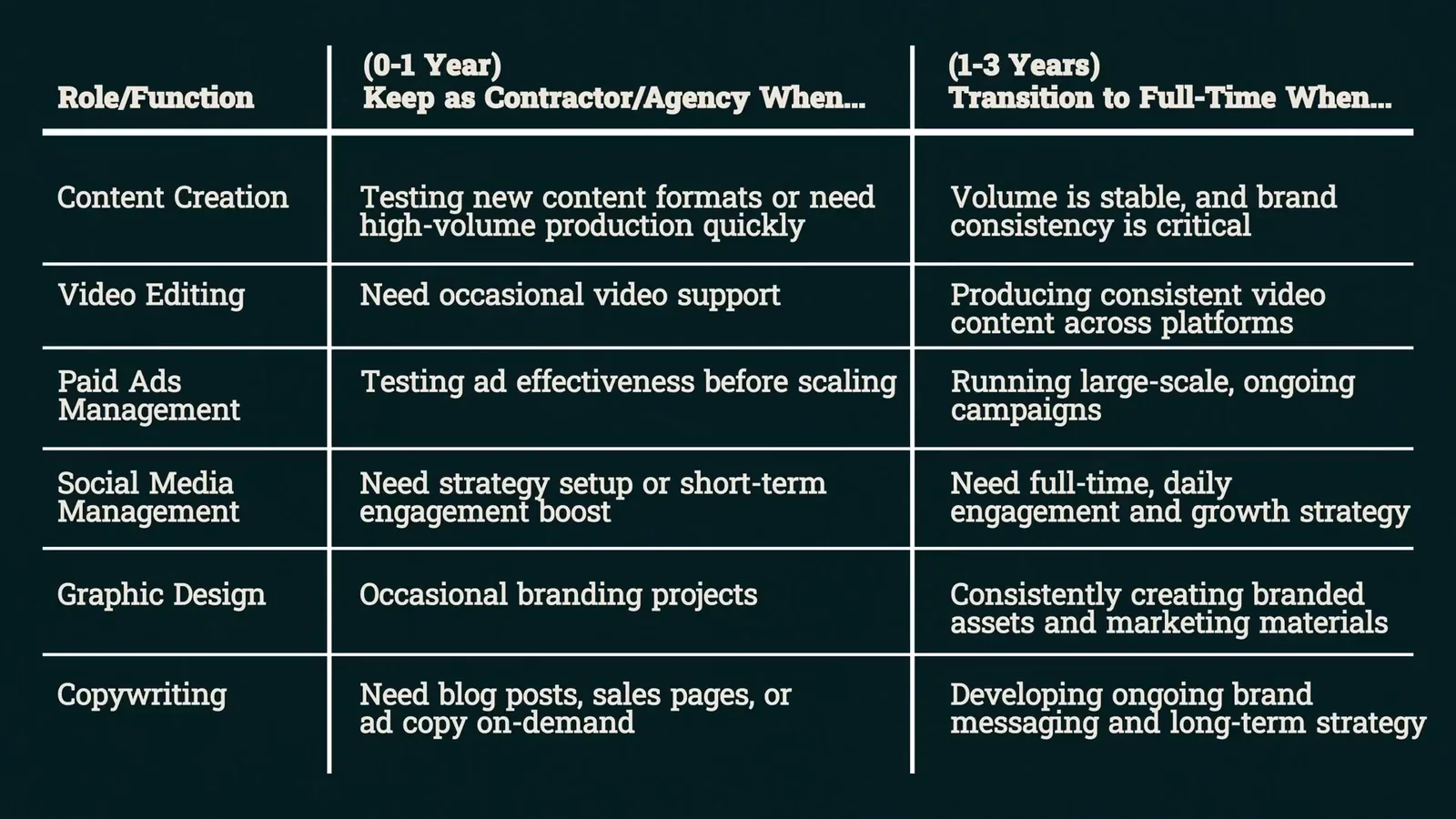
When to keep a role with a contractor or agency (0 to 1 year) and when to move it to full time (1 to 3 years), by function. Source: Caleb Ralston video, frame at 4:34:56
How do you monetize a personal brand without losing trust?
Before you ever ask for a sale, Caleb says your brand should do three things: "provide an unbelievable amount of value upfront," demonstrate credibility and expertise, and build a relationship. "If people feel like they know you, sales become effortless." Source: Caleb Ralston, video at 6:05:43.
He lists five monetization models: services (agency, consulting, coaching), products (digital or physical, with digital at higher margins), affiliates and sponsorships, community and memberships, and ads. If you are not sure where to start, he says to look at your email, DMs and comments, because your audience is probably already asking for something. Source: video at 6:06:47.
The principle behind all of it: "Share the knowledge, sell the execution." He watched about a hundred YouTube videos on changing the exhaust on his Harley, realized the job was too complex for him, and paid the Harley-Davidson dealer that had published the free content to install it. Source: video at 6:09:53.
Then build an offer stack, and "start with one offer, refine it, and then begin to expand." Source: video at 6:12:24.
| Step | Offer | Price range he gives | |---|---|---| | 1 | Free content | Free, builds trust and awareness | | 2 | Lead magnet (mini course, SOP, checklist, playbook) | Free, captures emails and phone numbers | | 3 | Low ticket offer (ebooks, mini courses, templates) | $10 to $100 | | 4 | Mid ticket offer (group coaching, memberships, in-depth courses) | $500 to $5,000 | | 5 | High ticket offer (one-on-one, agency, done for you) | $10,000 plus |
His final filter is the one to tape above your desk. Before any monetization move, ask: "will this increase trust with my audience or decrease trust?" If the answer is decrease, it is not worth it. Source: video at 6:18:01.
Where does GOVRL fit when you build a personal brand?
Both creators make the same quiet assumption: you know what is already working in your niche. Caleb's gap question needs you to know what everyone else is saying. Kallaway's 3-2-1 needs competitor videos sorted by outlier score. That research step is where most people guess, and guessing is how you end up with a broad brand nobody associates with anything.
A simple chain:
- Map the niche in GOVRL. Search your topic on YouTube, TikTok or Instagram, sort by outlier score and filter by channel size, so you see videos that beat their own channel, not just famous names.
- Find the gap. Open the top outliers and note the topic, format and angle. Use channel analysis on a few competitors to see what they win with again and again, then ask Caleb's question: what are they saying that I disagree with?
- Pick your three buckets. Group the winners by topic, choose one broad and two narrow buckets, and save the best examples in your swipe file as references for your hooks and formats.
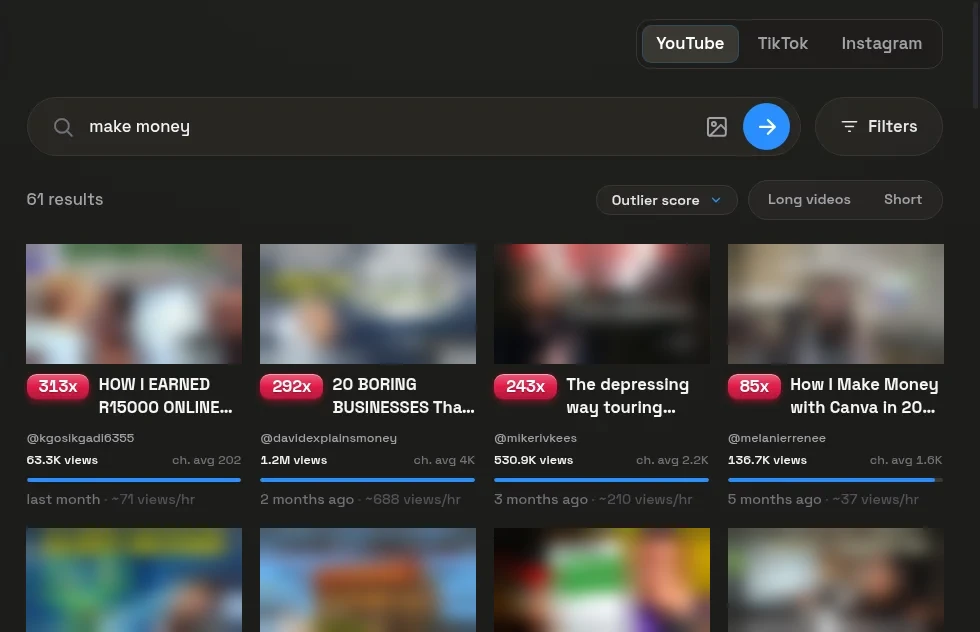
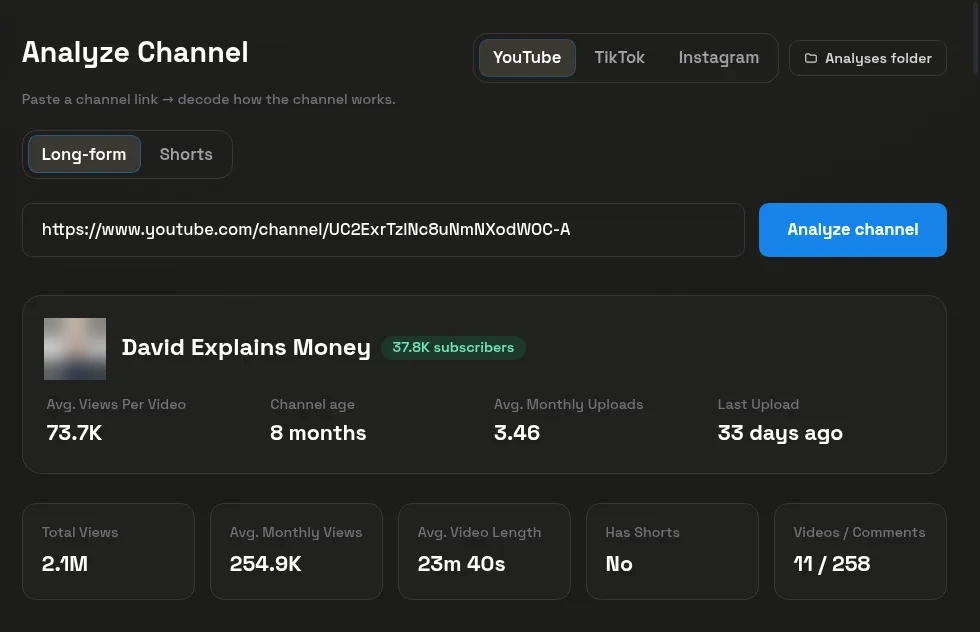
Keep the winners you find in your saved swipe file, and see govrl plans if you want the whole research step in one place.
Use it now: See which topics already win in your niche
A 30-day plan to build your personal brand
- Week 1: Define. Answer the four brand journey questions, list the associations you want and the ones you will refuse, and write your catalyst, core truth and proof in three sentences.
- Week 2: Position. Pull 20 to 25 competitors in your niche and their outlier videos from the last three months. Go through the seven positioning attributes and pick two or three you can stack. Choose your three topic buckets.
- Week 3: Publish. Pick your 80% medium and two or three platforms. Post on a 3-2-1 schedule on your highest leverage platform and repurpose each long video into clips and posts. Our guide on how to write a YouTube script helps if long form is your anchor.
- Week 4: Learn. Read the comments, saves and views. Kill the weakest bucket, promote a new one, and note what people praise or ask for. Log each change with the AI content experiment template, and keep your voice consistent with the AI brand voice checklist.
What is the real lesson from these videos?
A personal brand is not a look or a bio. It is the association people make with you after seeing you do the same relevant things again and again. The frameworks help you choose those things on purpose: what you want to be known for, the gap you fill, the story you repeat and the proof you keep adding. The part nobody can do for you is staying consistent long enough for the association to form, and protecting the trust once it does.