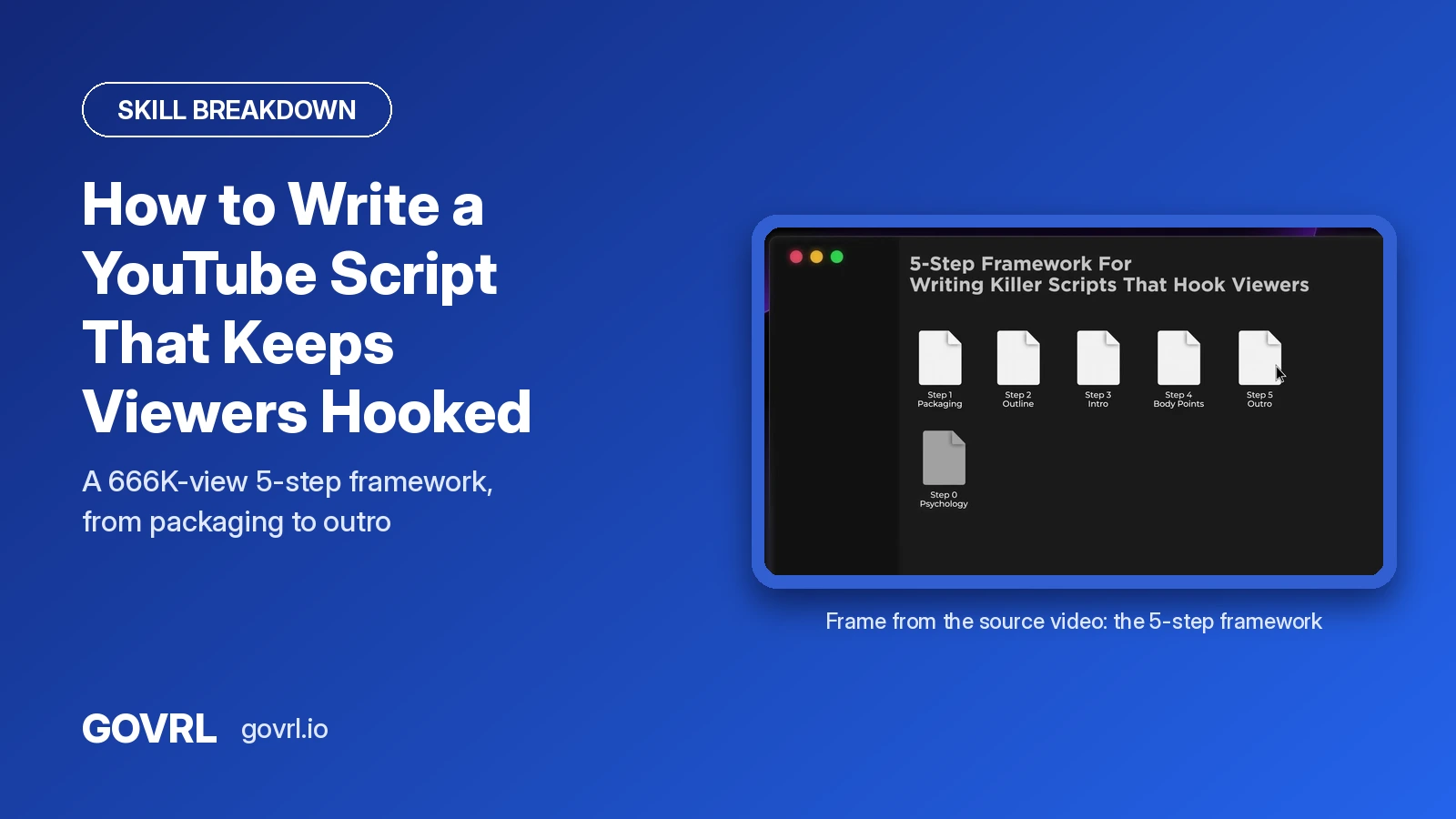
Short answer: Write the script in a fixed order. Lock the title first, then a bullet outline with points that are actually new, then a short intro that confirms the click and opens a question, then a body where each point explains what, how and why, then an outro that reminds viewers what they got. Kallaway's 666K-view breakdown calls this a 5-step framework, built on one rule: the video has to beat the expectations the title set.
Why is this video worth studying?
The video is How To Write A Killer Script That Keeps Viewers Hooked by Kallaway, published February 19, 2025. When we checked on October 30, 2026, it had 666,312 views on a channel with about 480,000 subscribers.
The comparison matters more than the raw count. Among the 30 uploads around it on his channel, the 26 with a public view count have a median of about 49,500 views. This one is roughly 13 times that. When a video on a "boring" craft topic beats its own channel by that much, it means people are actively searching for the answer.
Two notes before you copy it. First, Kallaway sells creator tools and courses, and the video points to his free email series and newsletter. We left those plugs out. Second, the steps are his process, not a guarantee. He says he has "analyzed hundreds of the top creators across every niche" and that they "all run the exact same script writing process." Treat it as a strong starting template, then test it on your own channel.
If you want to check outliers like this in your own niche, read how to find outlier videos in your niche.
Use it now: Find the outlier videos in your niche
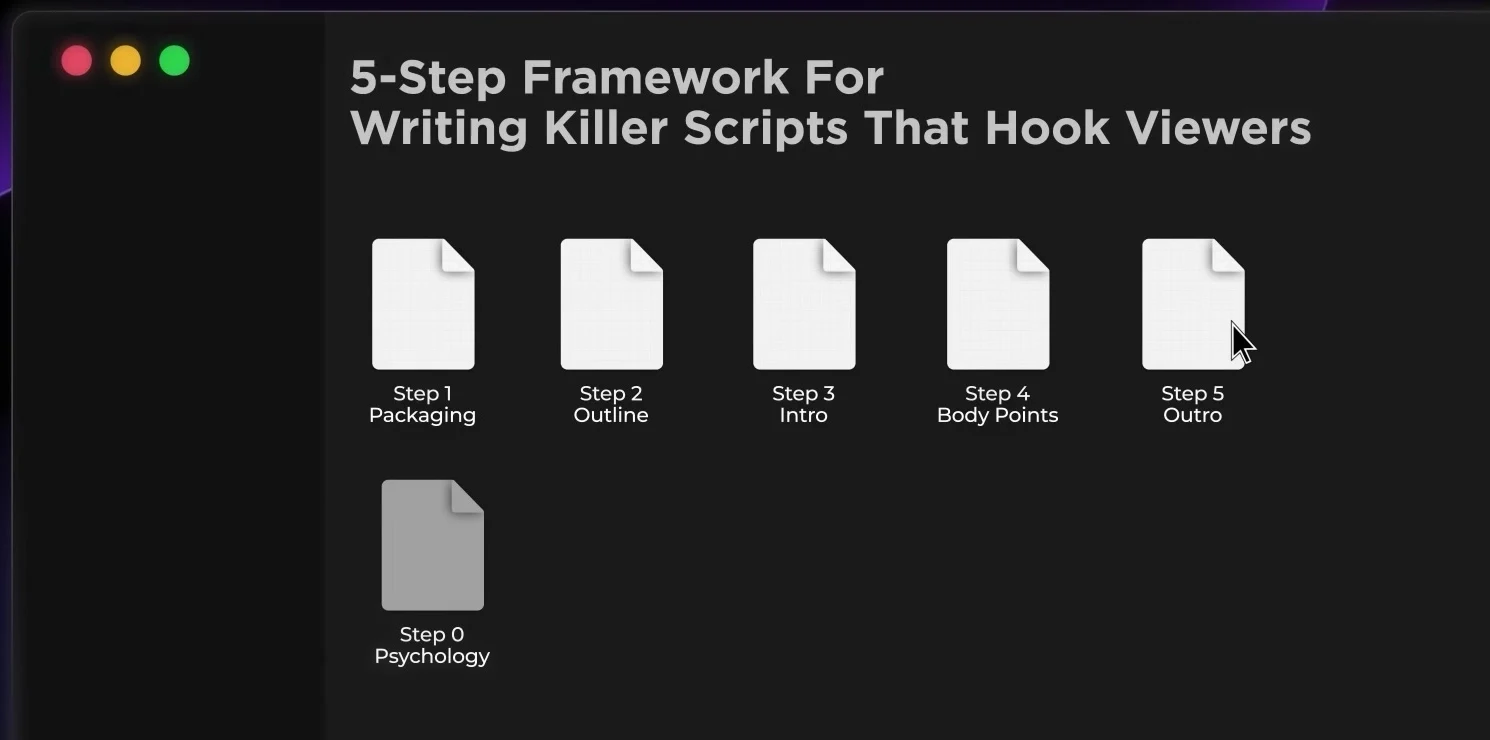
The framework as he lays it out on screen: Step 1 Packaging, Step 2 Outline, Step 3 Intro, Step 4 Body Points, Step 5 Outro, with Step 0 Psychology underneath. Source: Kallaway video, frame at 2:01
What is the one rule behind every good YouTube script?
Kallaway calls it Step 0: expectations versus reality. "When reality beats expectations and things go better than expected, people are happy, they keep watching and you win." When it goes the other way, they stop watching.
Every later step serves that rule. The title sets the expectation. The intro confirms it. The body beats it. The outro reminds viewers that it was beaten.
YouTube says something close in its own help page on recommendations. It groups performance into appeal, engagement and satisfaction, and it tells creators to make sure the intro "delivers on the promise made by your thumbnail and title." Source: YouTube Help, Understand your content performance.
Why should you write the title before the script?
"I write every single script in this exact same order," he says. Packaging comes first: the idea, the title and the thumbnail. Source: Kallaway, video at 1:59.
The reason is a principle he calls click confirmation. The first few lines of your intro must "confirm and ideally beat their expectations set by the title." You cannot confirm a promise you have not written yet.
For the title, the test is curiosity. He asks whether the title alone makes the viewer so curious about the pain point or problem that they cannot resist clicking. He also asks what the viewer will expect after reading it, because small wording changes shift that expectation.
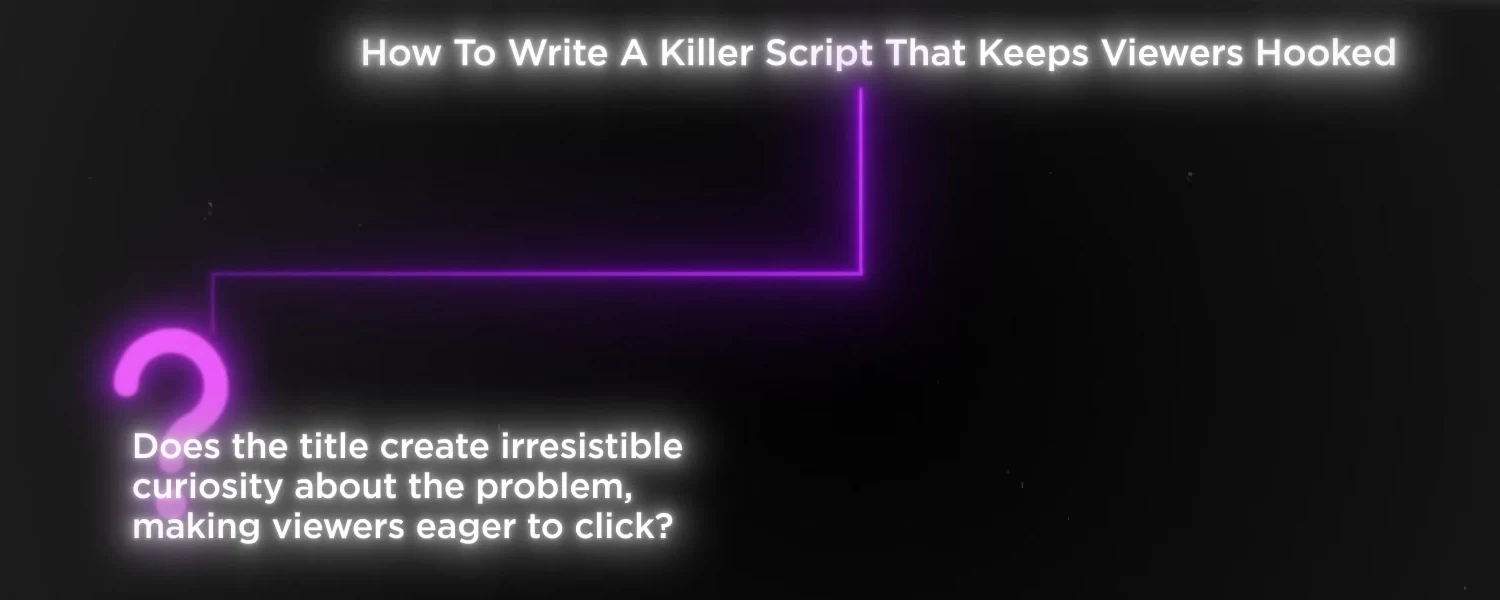
His title test on screen: does the title create irresistible curiosity about the problem, making viewers eager to click? Source: Kallaway video, frame at 3:49
The thumbnail can stay rough at this stage. In his words, "the title is a must, a loose thumbnail idea is fine."
How do you outline a YouTube script before writing it?
Make a quick bullet list of the points you plan to cover. Then zoom out and ask one question about each point: is this unique or not?
Uniqueness can come from the tip itself, from how you distill it, or from the example you use. If the points only repeat what viewers already know, the video cannot beat their expectations. He is strict about it: "if I don't have unique points in the outline, I'm not moving forward, I'm not making the video." Source: Kallaway, video at 6:45.
For each point that survives, layer on three things:
- What: what the point is.
- Why: why it matters.
- How: how it fits into the full story.
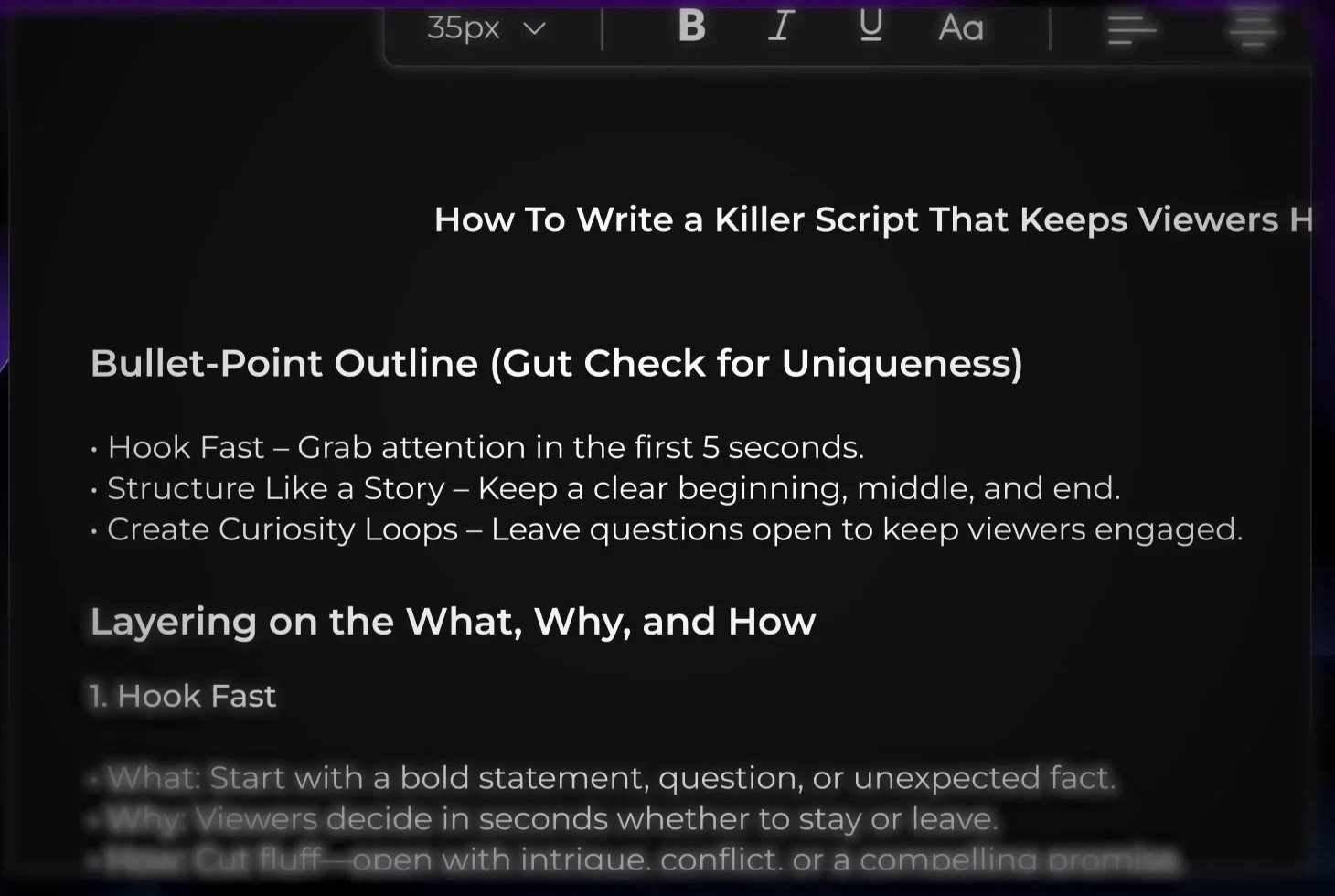
His outline document: a "gut check for uniqueness" bullet list, then the what, why and how layered onto each point. Source: Kallaway video, frame at 6:37
He calls this stage "the measure twice, cut once of content." The idea, title and outline are all done before he writes a single line of the script.
Use it now: Save the outlier videos you want to study in your swipe file
How do you write a YouTube intro that hooks viewers?
The intro has one job after click confirmation: open a curiosity loop. "Each line should make them want to go to the next line." He uses the same structure for short and long videos:
- Context. Say right away what the video is about, so the viewer knows they clicked the right thing.
- Common belief. Restate what most people already think about the topic. People who struggle with it usually hold that belief too, so it builds common ground.
- Contrarian take. Flip that belief. In this video the common belief is that scriptwriting is an art. His take is that it is closer to science, with a formula.
- Proof. Give a reason to trust the new approach.
- Plan. Tell viewers the steps you will walk through. Proof and plan can go in either order.
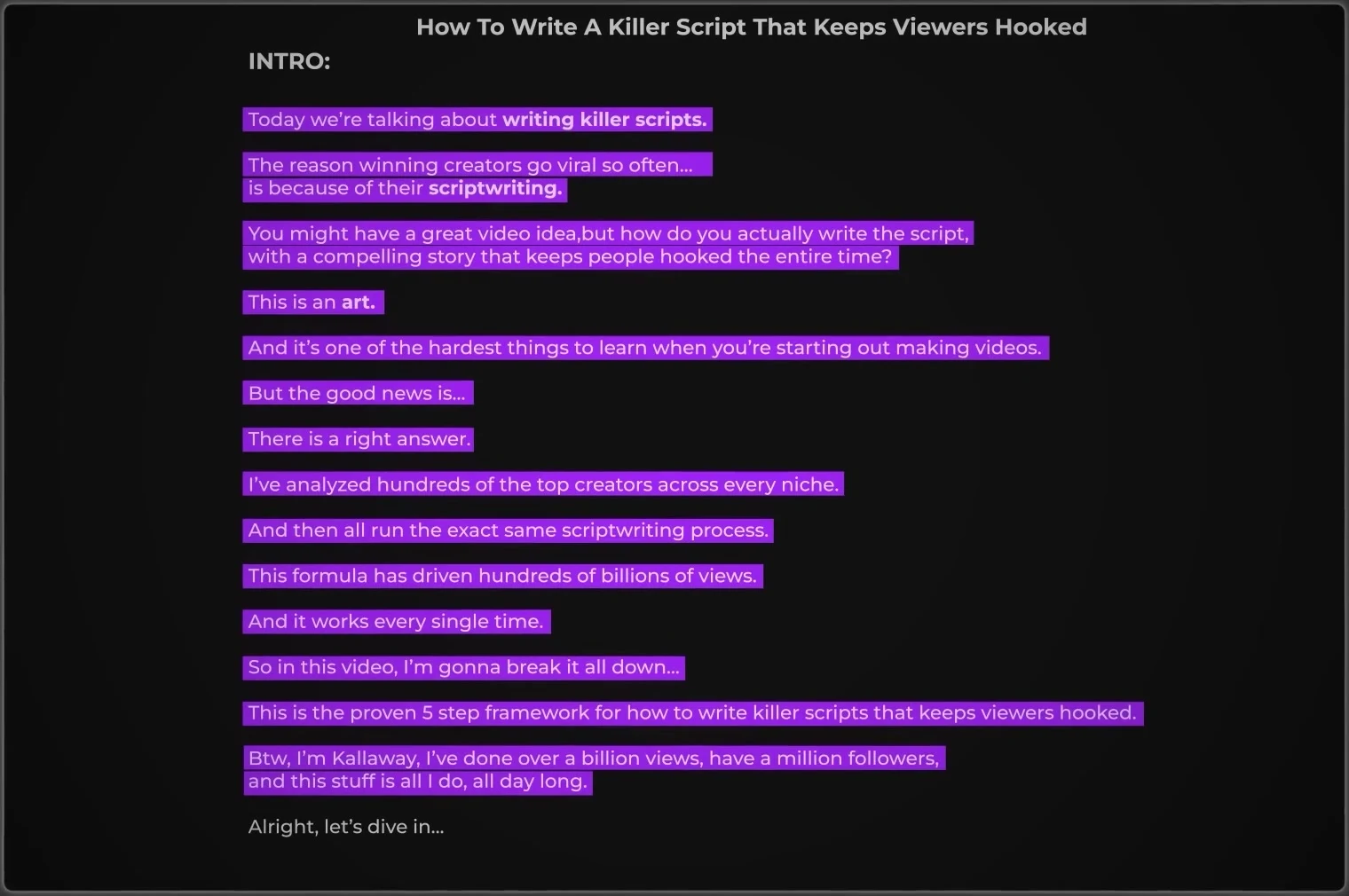
The intro he wrote for this exact video, highlighted line by line: context, the "this is an art" belief, the counter claim, the plan and his proof. Source: Kallaway video, frame at 10:28
Note the order inside his own intro. He states the plan and then lays the proof at the very end. Short lines, one idea each.
How should you order the points in the body?
This is the least intuitive part. The first body point has to be new and strong, because it is the moment viewers decide whether the video is better than they expected. But his cheat code is to "put your second best body point in that first slot." Source: Kallaway, video at 12:45.
The full order: second best point first, best point second, third best third, and so on. His reasoning: if your second point is weaker than your first, viewers learn that the value is going down. If it is slightly better, they stay to see what comes next. He compares it to music albums, where the biggest single rarely sits in the first slot.
Inside each point, he runs what he calls the value loop:
- Context: say what it is, as simply as possible.
- Application: say how to do it, with as many relevant examples as you can.
- Framing: say why it matters and how it fits into the whole story.
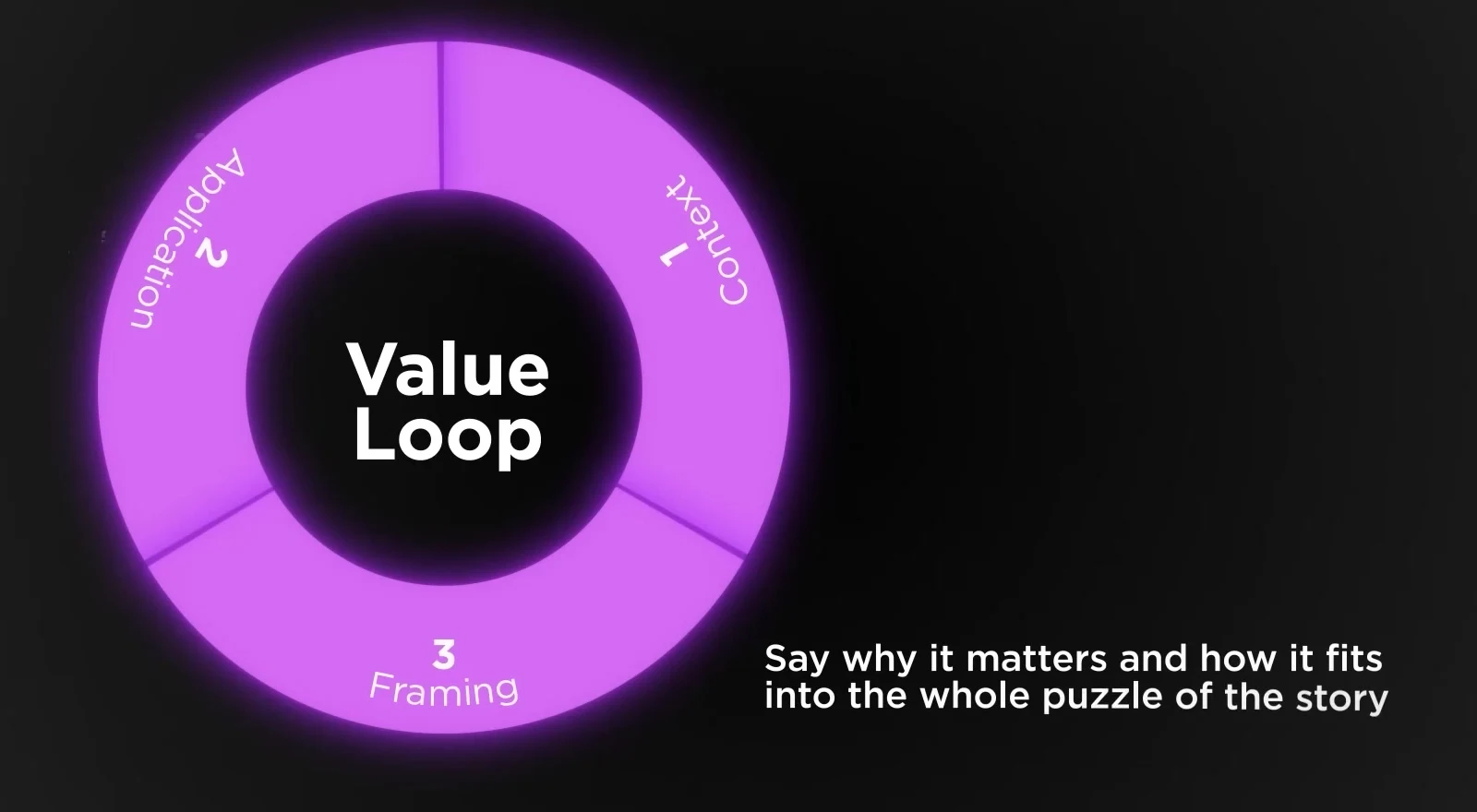
The value loop for every body point: 1 Context, 2 Application, 3 Framing, where framing says why it matters and how it fits into the story. Source: Kallaway video, frame at 14:28
Two more habits keep the body moving. He zooms in and out like a wave, big picture then tactic then big picture again. And he adds a rehook between points, a short line such as "that point was super important, but if you don't also couple it with this one, then the magic is lost." That line gives viewers a reason to stay for the next point.
How do you end a YouTube script and add a call to action?
The outro is short. Summarize the points and remind viewers of the problem you solved. He compares it to the free chocolate a restaurant brings with the check: a last reminder of the good experience. That high note is where he says likes, comments and shares come from.
For calls to action, he avoids a separate ad break. He calls his method native embeds: while outlining, "figure out proactively which point naturally suits highlighting the free resource you have as the solve." You frame the pain point inside the body, offer your resource as the fix, then move on.
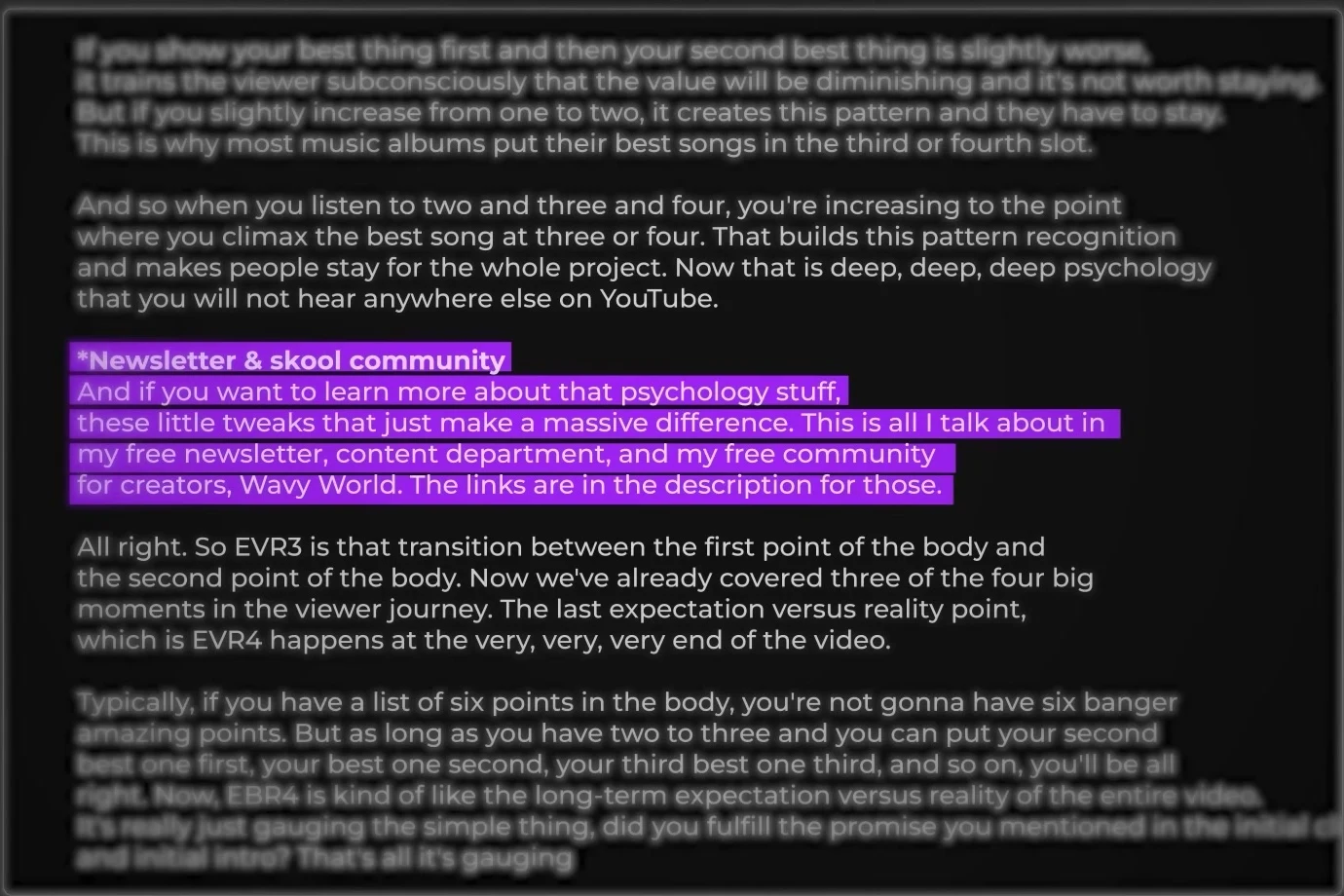
A native embed in his script document: the newsletter and community plug, highlighted, placed right after the deep psychology point it solves. Source: Kallaway video, frame at 18:26
Keep one rule from this: one clear ask, placed where it solves a problem you just raised, is less disruptive than a generic "subscribe" in the first minute.
What does a simple YouTube script template look like?
Here is his framework as a fill-in template. Copy it into your notes and fill it top to bottom.
| Block | What to write | Check before moving on | |---|---|---| | Packaging | Idea, title, loose thumbnail idea | Would the title alone make you click? | | Outline | 3 to 6 bullet points, each with what, why, how | Is every point new to your viewer? | | Intro | Context, common belief, contrarian take, proof, plan | Do the first lines confirm the title? | | Body | Points ordered 2nd best, best, 3rd best; value loop each; rehook between | Does each point end with a reason to keep watching? | | Outro | Summary plus the problem you solved | Does it end on a high note? | | CTA | One native embed tied to a body point | Does it solve the pain you just named? |
Read the finished script out loud before you record. Any line you stumble on is a line viewers will drift on.
Where does GOVRL fit in your scriptwriting?
The framework tells you how to write. It does not tell you which topic, title or angle your audience wants. Step 1, packaging, and the uniqueness test in step 2 both depend on knowing what already works in your niche and what viewers have already seen.
A simple chain:
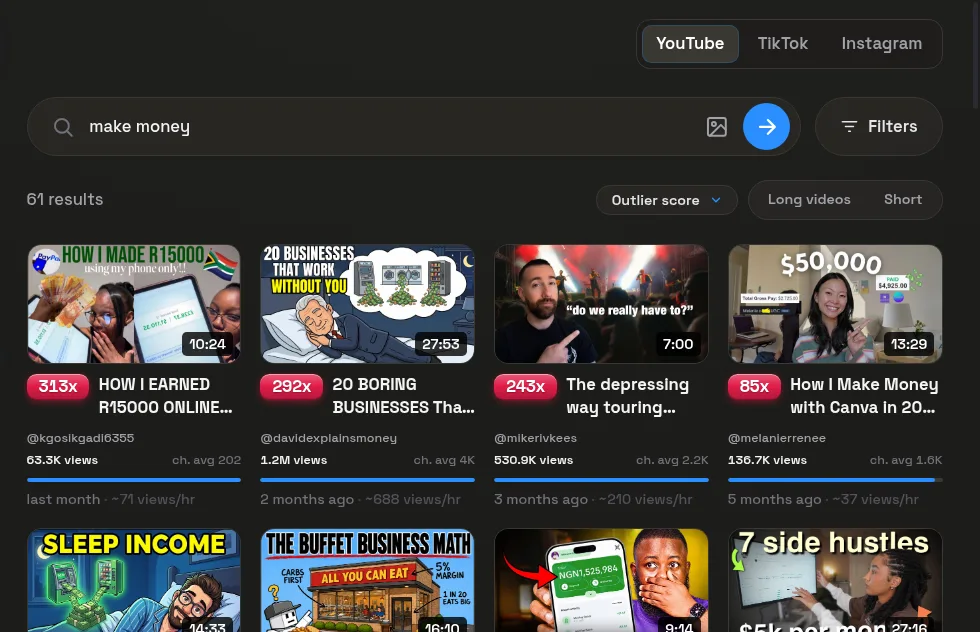
- Research in GOVRL. Search your niche on YouTube, sort by outlier score and filter by channel size, so you see videos that beat their own channel, not just big names.
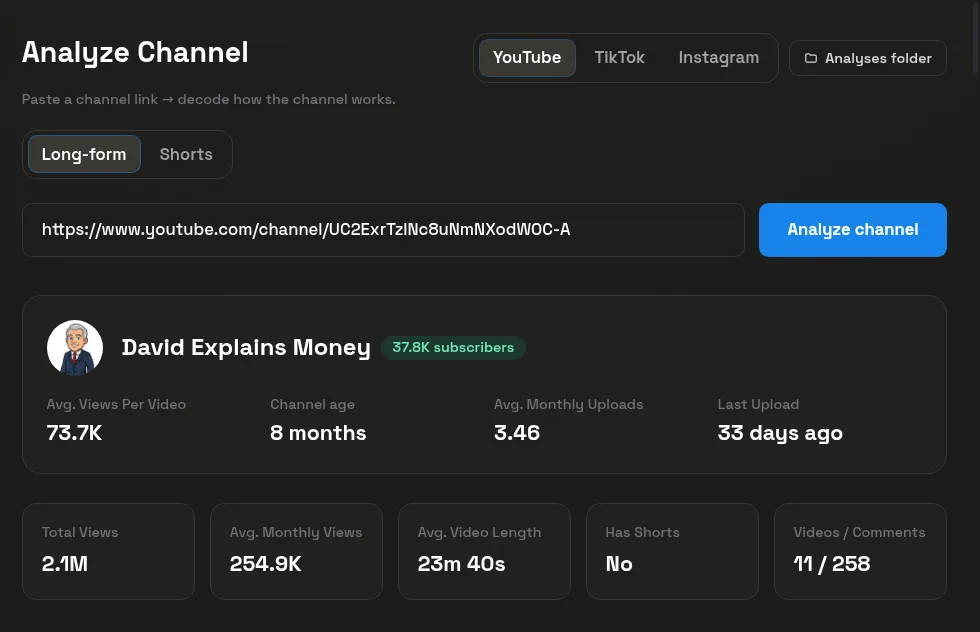
- Read the pattern. Open the top outliers and note the title wording, the first five lines of the intro and the point order. Use channel analysis to see which formats a competitor wins with again and again.
- Write against it. Save the winners in your swipe file. Then use the outline test: if your points only repeat what those videos already said, find a new angle before you write.
To see how packaging ideas from big channels translate to small ones, read our MrBeast thumbnail strategy for small channels. See govrl plans if you want the research step in one place.
Use it now: Compare your title ideas with the outliers in your niche
A 30-day plan to write better YouTube scripts
- Week 1: Study. Pull five outlier videos in your niche. Write out each intro line by line and label context, common belief, contrarian take, proof and plan.
- Week 2: Package and outline. For your next video, write the title first, then a bullet outline. Cut every point that fails the uniqueness test.
- Week 3: Write and read. Write the intro, body and outro in that order. Put your second best point first. Add one rehook between each pair of points. Read it out loud.
- Week 4: Publish and measure. Check audience retention in YouTube Analytics at the intro and at each rehook. If growth still feels slow, our guide on slow YouTube growth after 2 years covers the next checks. Track changes with the AI content experiment template.
What is the real lesson from this framework?
Good scripts are decided before you write them. The title sets a promise, the outline proves you have something new, and every later line exists to beat that promise. Most of the work is the boring part: checking that your points are actually unique. Start from what is already working in your niche, and you skip the guessing.