Short answer: no, AI voiceover on its own does not get a channel demonetized. What gets flagged is a video with nothing original in it. YouTube renamed its "repetitious content" policy to "inauthentic content" on July 15, 2025, and the rule is about content that is mass-produced and generic, not about which microphone or voice model you used. The real risk of AI voice is softer: viewers trust you less.
This post pulls the exact policy wording and real creator threads from Reddit (r/NewTubers, r/youtubers, r/personalbranding), so you can decide with sources instead of rumors.
Does AI voiceover hurt a YouTube channel?
Not directly. YouTube's channel monetization policies say content should "Not be mass-produced, generic, repetitive, or manipulative." The AI line in the policy is about "AI-generated content made with generic or unoriginal templates giving the impression of mass production without adding the creator's original, authentic insights or perspective." Voiceover is not named; a video with no insight of yours is.
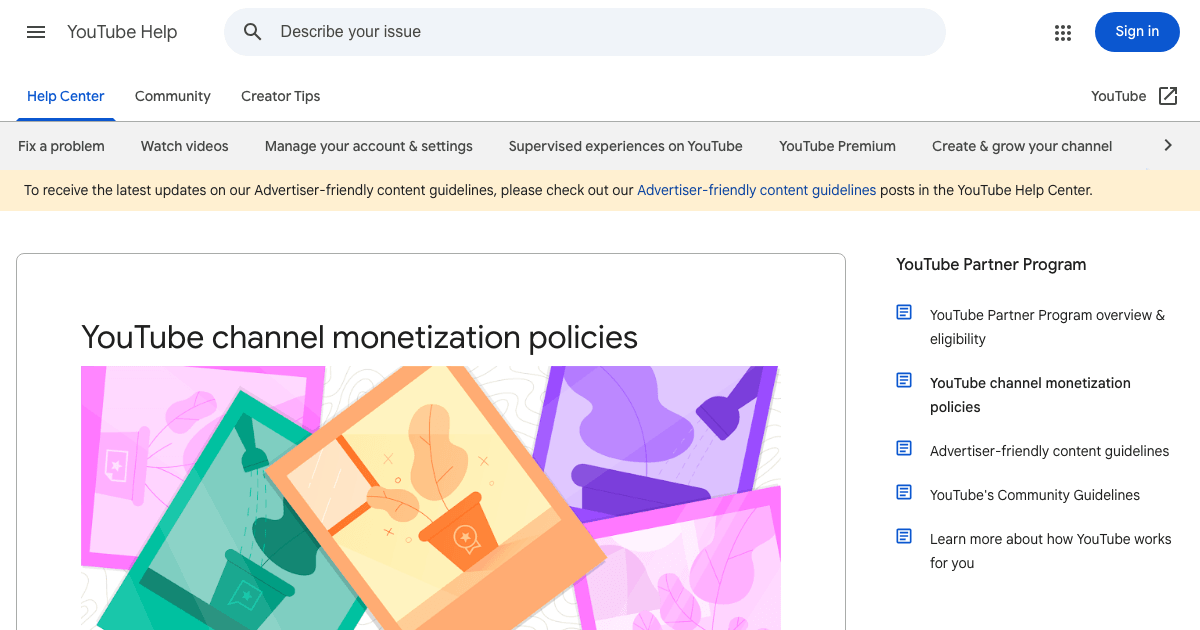
Source: YouTube Help, YouTube channel monetization policies
Creators are asking a sharper question: even if it is allowed, does it turn viewers off?
"So I’m wondering: is a high-quality AI voiceover still a negative for you just because you know it’s AI, or is it totally fine if it sounds natural?" — u/PuzzledSubstance859, r/NewTubers
Use it now: before you pick a voice, see what the top videos in your niche actually sound like. Open govrl Discover and play the outliers in your niche.
Can AI voiceover get you flagged for "inauthentic content"?
It can be part of the picture when the whole channel looks mass-produced: same template, same voice, same stock clips, many uploads a week. One creator on r/youtubers described exactly that outcome in a 289-comment thread.
"the YouTube algorithm completely demonetized/flagged my channel for "Inauthentic Content / Mass-Produced"." — r/youtubers
The fix is not "swap the voice". It is to make each video carry something only you add: your research, your opinion, your story. The policy text says the same thing in its own words: "original, authentic insights or perspective."
Use it now: write a script with your own angle instead of a template. The YouTube script skill on AgentAlley gives you a structure; you fill in the point of view.
Will viewers trust you less if they hear an AI voice?
This is the cost creators worry about most, and it is about trust, not rules.
"Once I start using it, even a little, I believe I will lose the trust of my audience forever." — u/XOCYBERCAT, r/NewTubers
"The voice problem is real. A perfectly polished AI can still sound like nobody." — u/corwinsword, r/personalbranding
"Sounds like nobody" is the key phrase. A human read has uneven energy, real pauses and stress on the words that matter. A synthetic read is smooth and even. The picture below is a drawing of that pattern, not a lab measurement:
Retention is where this shows up. MrBeast's leaked production guide judges every video on CTR, average view duration and average view percentage, as reported by Tubefilter. If the voice makes people leave early, that is the number that drops. We have not seen a public, controlled test comparing AI voice vs human voice retention, so test it on your own channel: same topic, two reads, compare average view duration in YouTube Studio.
What should you keep human when you use AI?
Keep the parts viewers subscribe for: your voice, your face if you show it, your opinions and your stories. Hand AI the steps around them: research, outlines, first drafts, captions, cutting silences. That split matches both the policy ("original, authentic insights or perspective") and what creators in these threads say they would accept.
A simple workflow:
- Find a proven idea in your niche (an outlier video, not a guess).
- Draft the outline with AI, then rewrite it in your own words with your take.
- Record it yourself, even on a phone mic. Clean the audio with AI if you like.
- Compare average view duration against your last 5 videos.
Do you have to label an AI voiceover on YouTube?
Usually not, but it depends on what the voice does. YouTube's altered or synthetic content disclosure asks creators to disclose when AI makes "a real person appear to say or do something they didn't do", alters footage of a real event or place, or generates a realistic scene that didn't happen. The same page lists things that do not need a label, including "Cloning one's own voice to create voice overs or dubs" and "Production assistance, like using generative AI tools to create or improve a video outline, script, thumbnail, title, or infographic."
In practice:
- A stock AI narrator reading your explainer about budgeting apps: no realistic person is being faked, so it falls outside the examples that need a label.
- Your own cloned voice dubbing your video into Spanish: listed as not requiring disclosure.
- A cloned voice of a famous person "reviewing" your product: that makes a real person appear to say something they didn't. Label it, or better, don't make it.
The page also warns that skipping a required label can lead to "removal of content or suspension from the YouTube Partner Program." So the label question is about faking real people, not about using a voice tool.
Is cloning your own voice better than a stock AI voice?
For trust, it is closer to the real thing, because viewers hear the same person each video. It still carries the "sounds like nobody" risk if the clone reads flat, so treat it as a tool for dubs or quick fixes, not a replacement for recording. A practical split: record the intro and your opinions live, and use the clone only to patch a mispronounced word or to translate the finished video.
Where can I learn to write a better script for my own voice?
A script written for speaking is shorter and punchier than one written for reading. AgentAlley has a free article on writing YouTube scripts with AI and a ready-to-use YouTube script skill for Claude and ChatGPT.
If you are moving from an AI voice to your own, read the script out loud before you record and cut every sentence you stumble on. Spoken scripts use shorter sentences, fewer lists and more "you". The Script Writing skill on AgentAlley covers formats for YouTube and video essays, so you can start from a structure built for speaking rather than for reading.
Once the video is live, add accurate captions. Many viewers watch on mute, and captions written from your real script read better than auto-generated ones when you have an accent or use niche terms.